Select your language


The cleaning sector warns of absenteeism 70% higher than the national average
Expired
International. At the presentation of the first White Paper on the Cleaning Sector, the Professional Association of Cleaning Companies (ASPEL) sounded the alarm about the critical situation that companies in the sector are going through in Spain, especially due to the high absenteeism, regulatory pressure and the impact of current wage and contractual policies.
According to the data revealed by the report – prepared by the economist and IESE professor Javier Díaz-Giménez with figures from the INE – 13% of employees in the sector are absent daily, which represents an absenteeism rate 70% higher than the national average. In 2023, 42 sick leaves were recorded per 1,000 workers, compared to a national average of 30.4, with an average duration of 55 days, fifteen more than the average in other sectors.
The report also points out that 53.9% of employees in the sector work part-time, a figure that shows the structural instability of cleaning employment, and which has been aggravated since the pandemic by factors such as the increase in the Minimum Interprofessional Wage (SMI) and the proposals for a reduction in working hours promoted by the Ministry of Labour.
For Juan Ignacio Beltrán, president of ASPEL, the scenario is complex and requires urgent responses:
"The growing absenteeism in the cleaning sector has an impact on the companies that provide these services, but also on those infrastructures critical to our society, such as our hospitals, schools, stations or airports".
In addition, Beltrán underlined the seriousness of other factors that compromise the viability of companies:
"Together with the rise in the SMI, the increase in contributions from 2023 and the possible reduction of the working day, the de-indexation of public contracts prevents prices from being automatically updated and puts the sustainability of companies in the sector at risk".
In line with this analysis, the author of the report, Javier Díaz-Giménez, warned that:
"Absenteeism from work is one of the great vulnerabilities of the cleaning sector and aggravates the impact of the reduction of the working day."
He also recalled that labour costs represent more than 85% of the total in companies in the sector, which seriously limits their room for manoeuvre in the face of new obligations.
Despite this adverse outlook, the sector has shown growth in turnover: it went from 11,288 million euros in 2019 to 13,709 million in 2023, with a workforce that currently exceeds 540,000 people throughout Spain.
ASPEL concludes that without measures that guarantee the updating of public contracts and that address the phenomenon of absenteeism, the cleaning sector – essential for the operation of public and private services – will continue to face a sustainability crisis that threatens its immediate future.
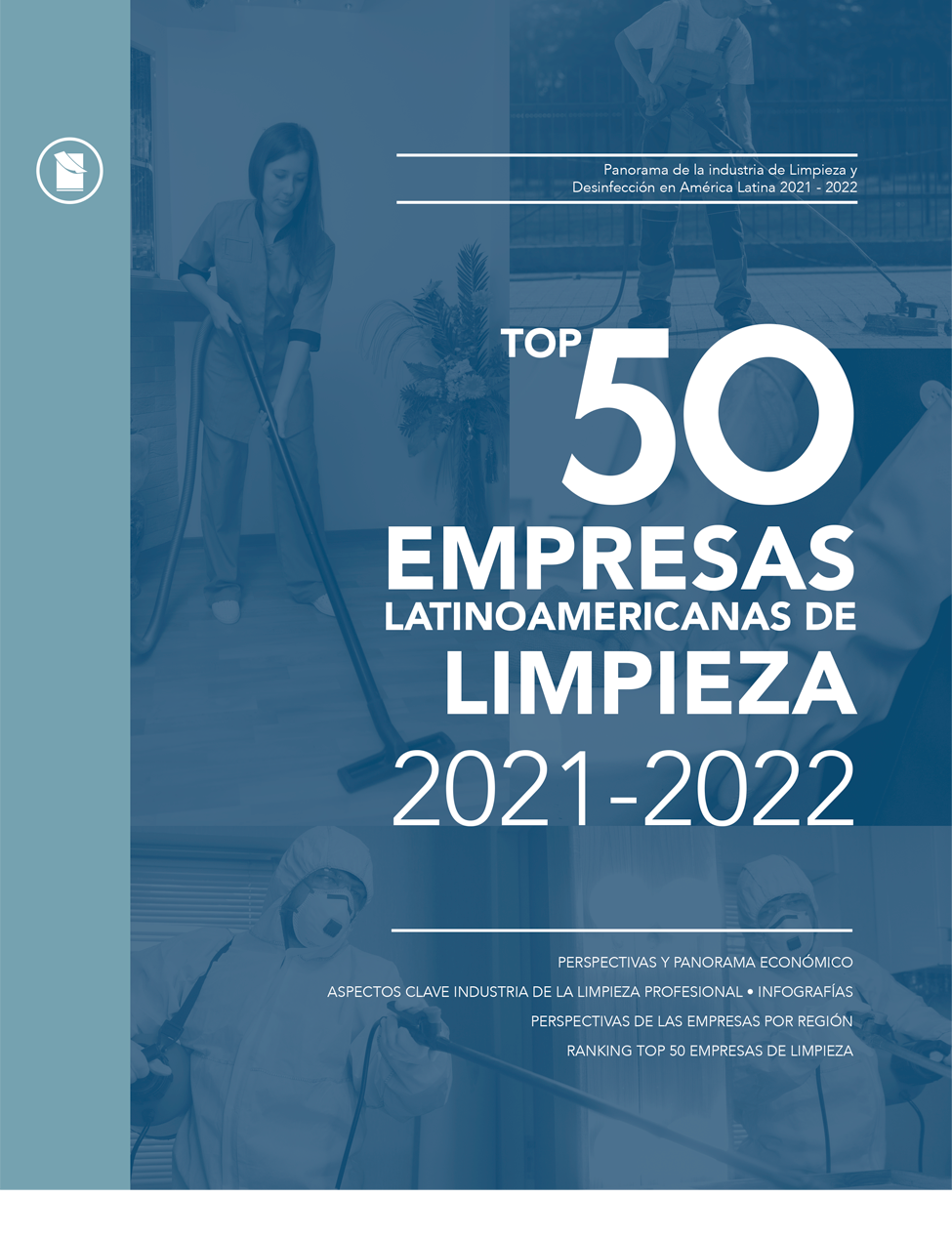
We present the second Report- Top 50 of Latin American Cleaning Companies, a ranking that highlights the most recognized companies in this region, considering the importance of this industry, cleaning and disinfection processes, not only in homes, but also in offices, hotels, industrial plants and any space where there is an influx of people.