Select your language


The industrial cleaning industry in Latin America incorporates sustainable practices
Expired
Latin America. The cleaning sector in Latin America is moving towards a production and consumption model with less environmental impact. Companies and consumers in the region are looking for solutions that guarantee hygiene and safety, while reducing negative effects on the environment.
Manufacturers of professional cleaning products have developed biodegradable formulas composed of natural ingredients that break down quickly and do not generate harmful residues. This trend is driven by customers' preference for options that follow sustainable principles.
The packaging also shows changes. More and more companies are using recyclable or reusable materials, in line with the circular economy, which aims to lengthen the useful life of resources and reduce the exploitation of natural resources.
Technological innovation has been another key factor. Several firms in the region invest in research and development to obtain formulas that maintain efficacy without resorting to harsh chemicals. From the company Tecpro they pointed out: "The adoption of these practices becomes a key element to gain confidence in a public that is increasingly attentive to what it consumes and the conditions in which it is produced."
In addition to products, companies' internal policies are also changing. Some have adopted social responsibility measures in their plants and offices, with work environments oriented towards health, well-being and work-life balance.
Another axis is the training of personnel. In different countries, training programs are promoted for workers to learn about new regulations, technologies and environmental practices, which raises production standards and strengthens the sector's adaptation to market changes.
The interest in organic products has expanded the available offer. In markets such as Mexico, Brazil, Colombia and Chile, competition has driven improvements in quality, price and technology.
The cleaning industry in Latin America is thus going through a transformation process in which sustainable practices are beginning to form a structural part of the operation of manufacturers and service providers.
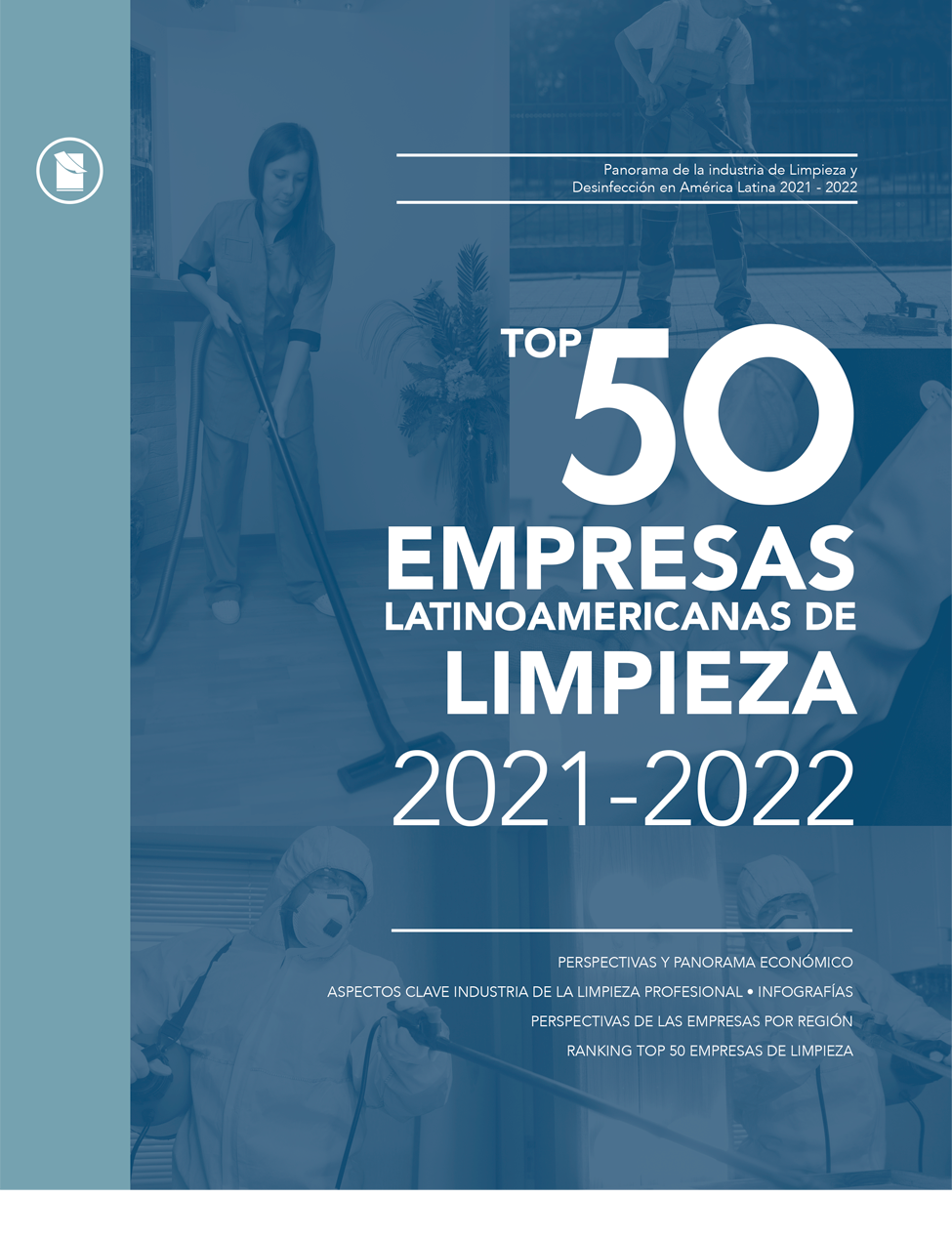
We present the second Report- Top 50 of Latin American Cleaning Companies, a ranking that highlights the most recognized companies in this region, considering the importance of this industry, cleaning and disinfection processes, not only in homes, but also in offices, hotels, industrial plants and any space where there is an influx of people.